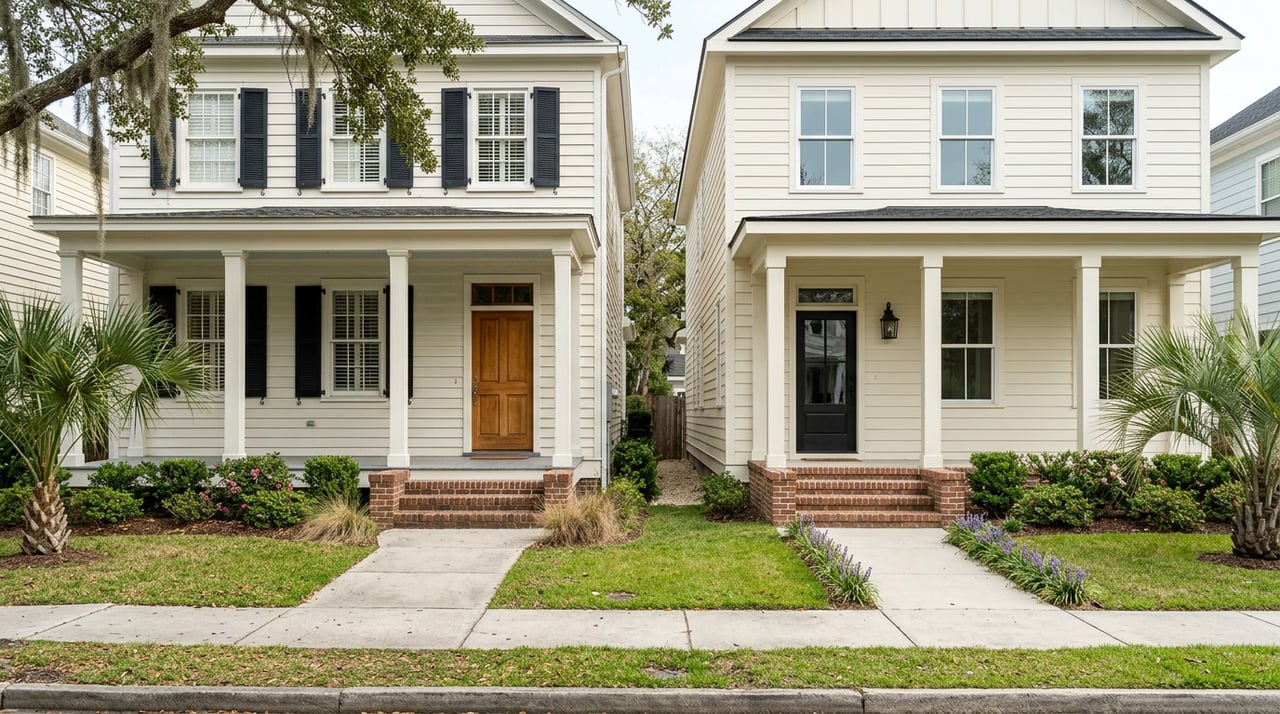
Should you build new on Daniel Island or buy a resale and move right in? If you are weighing timing, budget, and lifestyle details like club access or dock approvals, the choice can feel complex. You deserve clear, local guidance tailored to how this island actually works. In this guide, you will learn the real differences in timelines, approvals, fees, financing, customization, and warranties so you can choose with confidence. Let’s dive in.
Daniel Island market at a glance
Daniel Island is a premium, master-planned market with values well above much of greater Charleston. Many homes trade in the low to mid seven figures, and new construction often sits at the upper end of the island’s range. Prices and lot sizes vary by neighborhood, with Park-side estates and waterfront properties commanding notable premiums.
Neighborhood context matters. Daniel Island Park sits at the top of the market with golf access and larger homesites. South and central neighborhoods like Smythe Park, Etiwan Park, and Codner’s Ferry offer walkability and steady resale options. Downtown and Waterfront condominium communities appeal to buyers seeking a lock-and-leave lifestyle.
New construction on Daniel Island
Lot and neighborhood choices
If you want a specific homesite, orientation, or water access, new construction gives you control. Deep-water and half-acre lots are rare and priced accordingly. Waterfront buyers should plan for separate approvals for docks and bulkheads. State coastal permitting is handled through South Carolina’s Bureau of Coastal Management, and some projects may also require federal review. You can review the state’s critical-area permit pathways in the Bureau’s summary of general permits at the South Carolina Department of Health and Environmental Control site. For context on island-level design approvals, start with the Daniel Island Architectural Review Board resources at the Daniel Island Community Association.
- Learn about ARB guidelines and modification applications in the Daniel Island ARB resource center: Daniel Island ARB resources.
- Review South Carolina coastal permitting for docks and bulkheads: Critical area permitting and general permits.
Design controls and ARB steps
Daniel Island maintains cohesive neighborhood design through a mandatory ARB process. New builds typically move through conceptual, preliminary, and final reviews. Submittals follow a defined calendar, and missing a cutoff can add weeks. The ARB checklist outlines required documents such as surveys, elevations, finished floor elevations, and flood-related site sections.
- See the current submittal checklist and meeting scheduling notes: ARB New Construction Review Form and Checklist.
Plan for administrative costs that are unique to the island. The POA publishes closing charges and community enhancement fees, along with ARB review fees and construction deposits that apply before you can pick up stamped plans. These fees are part of the Daniel Island ownership experience for both new builds and resales, so it is wise to review them early.
- Explore current POA closing fees, ARB fees, and deposits: Daniel Island closing fees.
Timeline to build
Build time depends on path:
- Spec or inventory homes already underway can close more quickly since major approvals and much of construction are complete.
- Production homes with preset options usually finish faster than fully custom projects.
- Custom homes commonly require about 9 to 18 months from permitting to completion on Daniel Island because of design review steps, coastal foundations, and luxury-level finishes.
As a benchmark, recent national data show average single-family completion times of several months from permit to finish, with custom and owner-driven builds running longer. See a national comparison here: NAHB on single-family build times. On the island, the ARB meeting schedule and any coastal permitting for docks or bulkheads can add time, so build those checkpoints into your plan.
Customization and warranties
The biggest advantage of new construction is control. You can select your floor plan, finishes, and systems within the ARB’s design guidelines. You also benefit from builder warranties that often follow a 1-2-10 pattern: about one year for workmanship, two years for major systems, and up to ten years for structural coverage when backed by a builder or third-party provider. Ask to review the full warranty contract and confirm transferability and backing.
- See an overview of typical builder warranty structure: Understanding new-home warranties.
Financing a new build
Many Daniel Island buyers choose a construction-to-permanent, one-time-close loan. This combines the interim construction financing and the permanent mortgage, streamlining the process and limiting closing events. Builders and lenders will coordinate plan reviews, draw schedules, and subject-to-completion appraisals. Ask your lender about rate-lock options and how contingencies and change orders are handled.
- Learn the basics of one-time-close loans: FHA One-Time Close overview.
Buying resale on Daniel Island
Speed and simplicity
If timing matters most, resale is typically the fastest path to ownership. In balanced markets, financed purchases commonly close in about 30 to 45 days, and cash buyers can move faster. You avoid most pre-build fees and ARB plan reviews, though exterior changes after closing still follow ARB rules.
Renovation and approvals
Many buyers purchase resale and invest in upgrades that fit their style. Interior projects are often straightforward to schedule with contractors. Exterior changes that affect appearance or footprint, such as pools, docks, bulkheads, fences, or roof and solar modifications, typically require an ARB modification application.
- Review island modification guidance and applications: Daniel Island ARB resources.
For budgeting, national remodeling estimates suggest midrange interior updates can recapture a meaningful portion of cost at resale, while major luxury overhauls tend to return less than 100 percent. Use tools as a starting point, then secure local contractor bids for accurate island pricing.
- Explore a planning tool for remodel costs: Home remodel cost calculator.
Due diligence steps
For any resale, obtain a POA estoppel to confirm assessments due, special assessments, community enhancement fees, and any pending compliance items. This is standard on Daniel Island and helps you price your closing costs correctly.
- Check the island’s published closing-fee categories: Daniel Island closing fees.
Also confirm jurisdiction. Daniel Island is within the City of Charleston, but county taxation runs through Berkeley County. Ask the county for a written tax estimate, especially if you are purchasing a second home.
- Verify county and municipal context: Berkeley County municipalities.
Fees, clubs, and ownership costs
Daniel Island includes several associations with their own assessments and closing charges. Expect items like capitalization fees, community enhancement fees, estoppel fees, and ARB review charges when applicable. These fees apply to both new construction and resales and should be reviewed early in negotiations.
- POA and ARB charges overview: Daniel Island closing fees.
If you are buying in Daniel Island Park, there is a key club rule to plan for. Park property owners enroll for Social Memberships upon closing with the Daniel Island Club. Additional membership categories, such as golf or sports, have their own eligibility and fee structures.
- Membership categories and Park-resident rules: Daniel Island Club membership.
Waterfront buyers planning docks or bulkheads should budget for state coastal permitting through the Bureau of Coastal Management. ARB dock review and POA dock fees are separate island steps.
- Coastal permit guidance for docks and bulkheads: Critical area permitting and general permits.
New vs. resale: how to choose
Choose new construction if you:
- Want a specific lot, orientation, or deep-water access.
- Value full control over plan and finishes within ARB guidelines.
- Prefer builder-backed warranties on systems and structure.
- Can accommodate a longer, multi-step timeline.
Choose resale if you:
- Prioritize speed to close and immediate occupancy.
- Prefer established streetscapes and mature landscaping.
- Plan to renovate interiors and are comfortable submitting ARB modifications for exterior updates.
- Want a known final price without construction allowances or change-order risk.
If you like the island lifestyle but want a lock-and-leave home, condominium options in the Waterfront and Downtown areas can be compelling. If you need broader lot selection or different waterfront settings, nearby Mount Pleasant, Isle of Palms, Sullivan’s Island, and other Cainhoy-peninsula communities offer alternative fits at various price points.
How King & Society can help
You should not have to navigate island approvals, construction schedules, and closing fees on your own. As a vertically integrated firm, we combine brokerage, custom building, renovation, and property management under one roof. That means you can explore both paths with a single team, compare true costs and timelines, and move forward with a curated plan for your lifestyle, whether you are building in Daniel Island Park or refining a resale near Smythe Lake.
Ready to compare specific homes and lots, run numbers on upgrades, or map out a build timeline around ARB dates and coastal permits? Let’s create a plan tailored to you. Start your Charleston home journey with King & Society Real Estate.
FAQs
What is the Architectural Review Board on Daniel Island?
- The ARB reviews and enforces design guidelines for new builds and exterior modifications. Expect defined submittal stages, meeting schedules, and required documents. Start here: Daniel Island ARB resources.
Are Daniel Island Park buyers required to join the club?
- Park property owners enroll for Social Memberships upon closing with the Daniel Island Club. Other categories, like golf or sports, have separate eligibility and fees. Details: Daniel Island Club membership.
How long does a custom build take on Daniel Island?
- Many custom homes require about 9 to 18 months from permitting to completion, depending on design, approvals, and scope. For national context on build times, see NAHB’s summary, and review island requirements here: ARB checklist.
What fees should I expect at closing on Daniel Island?
- The POA lists community enhancement fees, capitalization fees, estoppel fees, and ARB-related charges where applicable. Review the current schedule: Daniel Island closing fees.
Do I need permits for a private dock on Daniel Island?
- Most waterfront docks and bulkheads require state coastal permits through the Bureau of Coastal Management, and some projects may also involve federal review. ARB dock review is a separate island step. Start with the state’s guide: Critical area permitting and general permits.
How do construction-to-permanent loans work?
- A one-time-close loan combines the construction phase and your permanent mortgage, reducing duplicate closings. Lenders will review plans, builder credentials, and completion appraisals. Learn more: FHA One-Time Close overview.
Can I change the exterior of a resale home after closing?
- Yes, but exterior changes typically require an ARB modification application and approval before work begins. See guidance and forms: Daniel Island ARB resources.